- Safdar Gardezi
- August 14, 2026
Six months on: How the Iran war reshaped the Middle East
-

- Ishtiaq Ahmad
- August 28, 2026
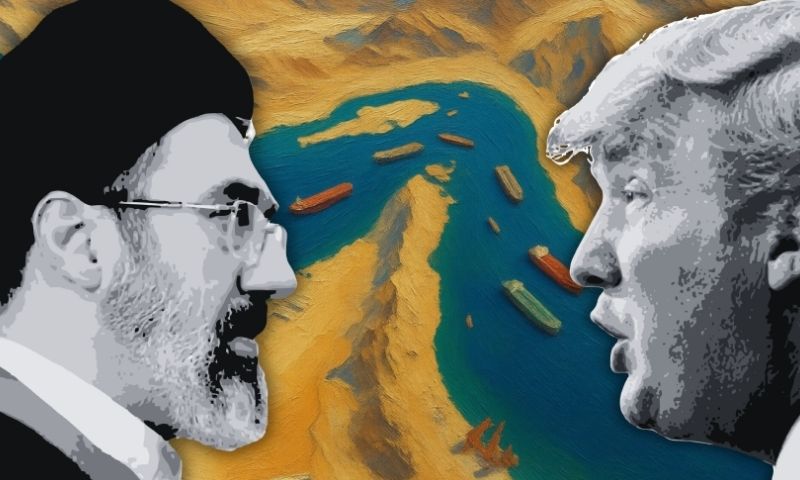
Six months after the US and Israel launched their military campaign against Iran on February 28, the Middle East looks markedly different. Iran has survived a punishing military campaign, but at considerable cost, with its military capabilities badly damaged, its economy under severe pressure and the regional network it spent decades building significantly weakened. The United States and Israel demonstrated overwhelming military superiority, yet neither regime change in Tehran nor a durable political settlement followed. The Gulf became a major theatre of the conflict, while disruption to the Strait of Hormuz pushed its economic consequences far beyond the region.
There is no simple winner or loser. What the conflict has done is change the regional balance and leave behind an uneasy stalemate. Military pressure continues, but so does diplomacy. Pakistan’s emergence as an important channel between Washington and Tehran has been one of the more unexpected features of the past six months.
The Strait of Hormuz turned a regional war into a global economic crisis. Iran had long threatened to disrupt this vital energy route if its survival was endangered. This time, the threat became real. Restrictions on navigation, attacks on shipping and the subsequent US blockade disrupted energy flows and pushed up shipping and insurance costs.
The effects were felt well beyond the Gulf. Asian economies depend heavily on Gulf energy, and higher transport and energy costs eventually reach businesses and consumers around the world. The past six months have shown once again why what happens in Hormuz cannot remain confined to the Middle East.
Iran, however, has paid a political price for using this leverage. Tehran did not start the war, but attacks affecting Gulf countries and commercial shipping have hurt its standing among neighbours that had tried to stay out of the conflict. Saudi Arabia and other Gulf states largely kept away from the US-Israeli military campaign, yet still found themselves exposed to Iranian or Iran-linked attacks.
The Iranian state survived despite enormous military and economic pressure, disproving expectations in some quarters that sustained attacks would bring down the regime. Nevertheless, Tehran is hardly where it was six months ago.
The regional network Iran spent decades building has been badly weakened. Its position in Syria had already collapsed, Hezbollah in Lebanon has suffered major setbacks, and its room for manoeuvre in Iraq has narrowed. This has made the Houthis increasingly important as one of Tehran’s remaining means of exerting pressure in the region.
But that card is also becoming harder to play. Saudi Arabia considers Houthi attacks a red line. The Makkah Joint Defence Agreement among Saudi Arabia, Pakistan and Türkiye has changed the equation further. Pakistan wants accommodation with Iran, but it also wants attacks on Saudi Arabia to stop. Its security commitments now make that concern more immediate.
Washington, too, has changed tack, with President Donald Trump increasingly putting greater emphasis on economic pressure after months of military escalation. The blockade, tougher sanctions and restrictions on Iranian trade are meant to squeeze Tehran without immediately returning to another major round of fighting.
The pressure is beginning to show. Iran faces falling revenues, inflation, currency weakness and shortages. The American calculation seems straightforward: if military force could not produce the desired political concessions, sustained economic pressure might.
Whether that calculation works is another matter. Iran has lived with sanctions for decades, and its leadership cannot easily be seen to surrender under American pressure. This is why threats and diplomacy are continuing at the same time.
Pakistan’s role has been one of the more interesting developments of the conflict, as Islamabad has kept its relationship with Tehran while strengthening its ties with Washington and moving much closer to Saudi Arabia on security. That gives it diplomatic reach across divides that few countries presently enjoy.
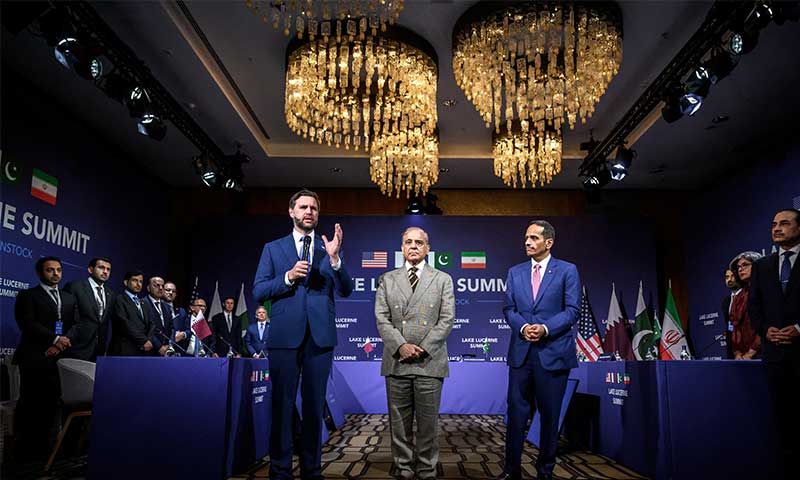
Pakistan helped slow the momentum of the fighting and open space for diplomacy. The Islamabad Memorandum of Understanding was followed by a 60-day negotiating framework in Switzerland. The 60-day period has passed without a comprehensive settlement, but the process kept negotiations alive at a time when another round of escalation appeared entirely possible.
Field Marshal Asim Munir’s latest visit to Iran, his fourth this year, shows that the channel remains active. The issues under discussion go to the heart of the crisis: free navigation through Hormuz, possible relief from the US blockade and sanctions, and an end to attacks by Iran-aligned groups, especially the Houthis.
Oman is working on another track. Its foreign minister’s engagement with Tehran has focused on finding a middle way over Hormuz. There are positive signals from these efforts, although a settlement remains some distance away. For the moment, talks and brinkmanship are proceeding together.
Iran’s regional position is clearly weaker than it was before the conflict. Syria, Lebanon and Iraq no longer provide Tehran with the same strategic space, while relying heavily on the Houthis risks widening tensions with Saudi Arabia and its partners.
Israel also faces questions of its own. It demonstrated that it could strike deep inside Iran, but the larger goal envisaged by some in Israel — fundamental political change in Tehran — did not materialise. The Iranian system survived, leaving the difference between military success and an unfinished political outcome as an issue that may yet confront Benjamin Netanyahu at home.
Trump’s objectives also appear somewhat different from Israel’s more ambitious expectations. His recent moves suggest that he may accept a deal that opens Hormuz, restrains Iran’s regional proxies and allows Washington to claim that its pressure worked. He appears less interested in an indefinite war to remake Iran.
For the Gulf states, perhaps the biggest lesson has been that staying out of a war does not protect them from its consequences. They wanted stability and economic growth, not another regional confrontation. Yet their security, trade and energy routes were quickly caught up in it. The new security arrangements involving Saudi Arabia, Pakistan and Türkiye need to be seen partly against this background.
Six months on, Iran is weaker, but it has not been defeated. The United States retains a huge military and economic advantage, but that advantage has not resolved the political questions at the heart of the conflict. This is why diplomacy keeps returning after every round of escalation.
Pakistan matters because it has been able to keep doors open when others could not. While it did not decide the course of the conflict and cannot impose a settlement, it helped break the momentum towards a wider war and remains an important channel between Washington and Tehran. Oman is playing a similarly useful role on the question of Hormuz.
The immediate issue is how long the present balance can last. Washington is betting that economic pressure will eventually force greater Iranian flexibility. Tehran is betting that it can endure long enough to secure acceptable terms without giving up its remaining leverage. Hormuz remains central to both calculations.
That is perhaps the clearest picture six months on. Iran survived, but at considerable cost, while Israel’s military gains did not produce the political transformation it sought. The Gulf paid heavily for a war it tried to avoid, while Pakistan acquired an unexpectedly important diplomatic role.
There is movement towards negotiations again, but there is no settlement yet. The Middle East that entered the conflict on February 28 is gone. What replaces it will depend on whether the present diplomatic opening holds — or whether another miscalculation sends the region back to war.