- WEB DESK
- September 14, 2026
US leads six-nation coalition to challenge Chinese influence in Panama Canal
-

- Sadia Basharat
- April 30, 2026
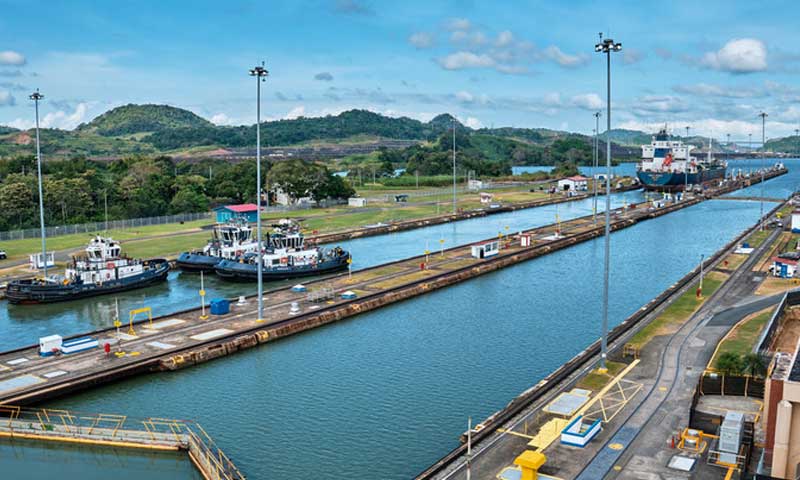
WEB DESK: The United States has formalised a six-nation coalition aimed at forcing China to relinquish its strategic interests in two major Panama Canal ports.
In a significant escalation of regional tensions, Washington has accused Beijing of infringing upon Panamanian sovereignty and “politicising” global trade routes, according to RT News.
China has swiftly dismissed the allegations as “baseless” and a “distortion of facts,” marking a fresh low in the geopolitical tug-of-war over the Western Hemisphere’s most vital maritime artery.
Washington’s ‘Western hemisphere’ strategy
The move is a calculated component of a broader US effort to excise Chinese influence from Latin America, aligning with a National Security Strategy that explicitly seeks to prevent non-Western “competitors” from controlling critical infrastructure.
This diplomatic offensive follows rhetoric from US President Donald Trump, who previously claimed China was effectively “operating” the canal and suggested the US might “take it back.”
On Tuesday, the US State Department issued a joint communiqué with Bolivia, Costa Rica, Guyana, Paraguay, and Trinidad and Tobago, asserting that any attempt to undermine Panama’s sovereignty constitutes a collective threat to the region’s “non-negotiable” freedom.
Beijing’s Rebuttal and the Port Dispute
Beijing has reacted with indignation, with Foreign Ministry spokesman Lin Jian accusing the US of conducting a “smear campaign” and “over-securitising” commercial port operations.
The friction centres on a January ruling by Panama’s Supreme Court, which annulled contracts for the Balboa and Cristobal ports held by a subsidiary of the Hong Kong-based CK Hutchison Holdings.
While the US has backed the court’s decision to oust the firm after nearly thirty years of management, the Chinese company has launched international arbitration.
Alleging unlawful expropriation, the firm is currently seeking over $2b (£1.58b) in reparations, further complicating the legal and diplomatic standoff.
You May Also Like


- WEB DESK
- September 14, 2026