- Reuters
- October 6, 2026
Iran sets up new Strait of Hormuz authority, warns ships must seek permission
-

- Sadiq Khan
- May 18, 2026
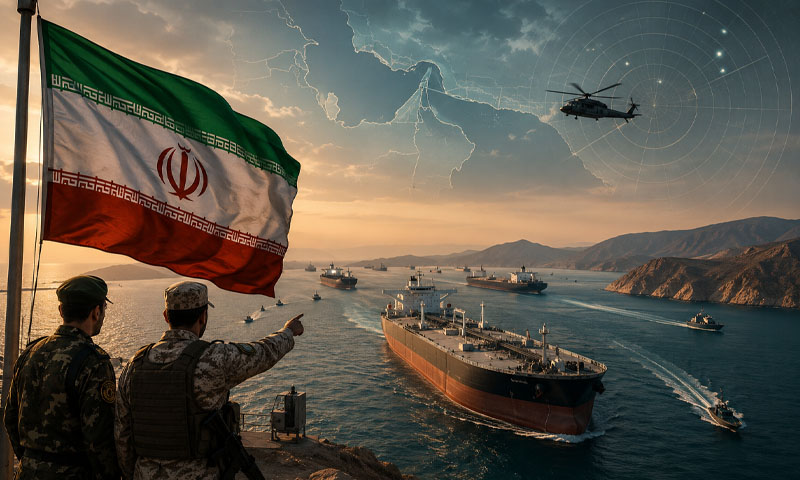
TEHRAN: Iran’s Supreme National Security Council has announced the formation of a new body to oversee operations in the Strait of Hormuz, as tensions continue to rise across the Gulf region.
According to Iranian media, the newly created Persian Gulf Strait Authority (PGSA) will manage transit and navigation through the strategic waterway and provide “real-time updates on the Hormuz Strait operations and latest developments.” The announcement was shared on X by the council as well as the Revolutionary Guards’ navy account.
The PGSA later warned that any vessel passing through the Strait of Hormuz without prior permission would be considered “illegal,” according to Al Jazeera.
In a statement posted on its X account, the authority said navigation within the designated boundaries of the Strait of Hormuz would require “full coordination” with the Iranian Armed Forces and relevant authorities.
1/
— PGSA | نهاد مدیریت آبراه خلیج فارس (@PGSA_IRAN) May 18, 2026
نهاد مدیریت آبراهه خلیج فارس (Persian Gulf Strait Authority – PGSA) نهاد قانونی و مرجع نمایندگی جمهوری اسلامی ایران جهت مدیریت عبور و مرور از تنگه هرمز است.
The authority described itself as the legal representative body of the Islamic Republic of Iran for managing passage and transit through the Strait of Hormuz, one of the world’s most critical oil shipping routes.
“Passage without permission will be considered illegal,” the statement added, referring to maritime movement through waters previously defined by Iran’s military and state authorities.
The Supreme National Security Council, Iran’s top security body chaired by the Supreme Leader’s representative, said the move comes amid heightened scrutiny of shipping activity through the key global energy corridor.
Separately, Iran’s foreign ministry spokesperson said talks with the United States were continuing through Pakistani mediation, according to Iran’s semi-official Tasnim news agency.
The spokesperson dismissed speculation surrounding uranium enrichment and related materials as baseless, adding that Iran had “no enmity with any country in the region.”
“They saw that the presence of America does not bring security and causes insecurity for everyone,” the spokesperson said while urging regional states to learn lessons from recent developments.
Meanwhile, Gulf countries condemned a series of drone attacks targeting Saudi Arabia and the United Arab Emirates.
Kuwait and Qatar issued separate statements denouncing drone incursions into Saudi airspace, which officials said originated from Iraq. Kuwait termed the attacks a violation of UN Security Council Resolution 2817, while Qatar described them as a “rejected aggression” against Saudi sovereignty.
Both countries reaffirmed solidarity with Riyadh and backed measures aimed at protecting Saudi territory and citizens.
Oman also condemned a drone strike that caused a fire at the Barakah Nuclear Energy Plant in the UAE, calling for restraint and rejecting “all hostile and escalatory acts.”
UN Secretary-General Antonio Guterres was “deeply alarmed” by reports of damage near the Barakah facility, warning that attacks near civilian and nuclear infrastructure violated international law.
Separately, former US congresswoman Marjorie Taylor Greene said on X that any potential deployment of American troops into Iran could trigger “a political revolution in America,” reiterating her opposition to foreign wars.