- WEB DESK | Javed Soomro
- October 26, 2026
Iran-US deal could unlock trade opportunities as Pakistan’s economy stays on course: Aurangzeb
-

- Sadia Basharat
- June 17, 2026
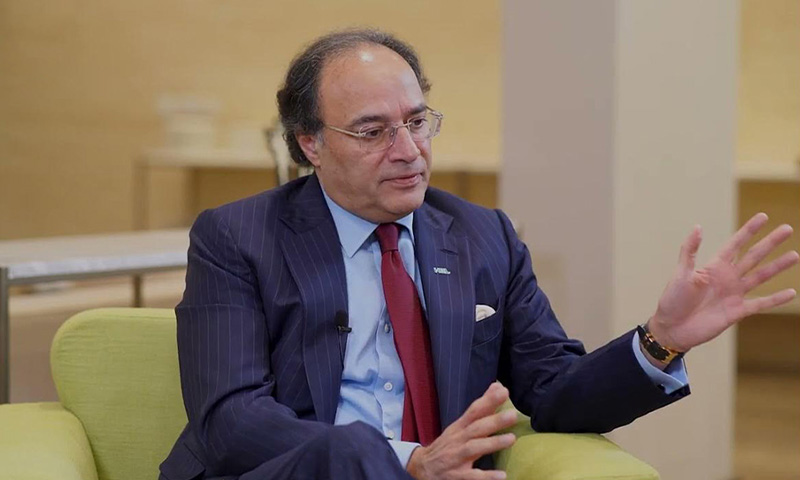
Finance Minister Muhammad Aurangzeb on Tuesday said the emerging Iran-US agreement could create significant economic opportunities for Pakistan, while maintaining that the country remained on a strong economic trajectory despite regional and global challenges.
“The Iran-US agreement is a matter of pride for Pakistan,” Aurangzeb said during an interview with senior journalist Asma Shirazi in Faisla Aap Ka. “The markets have responded positively, and perhaps that is one reason why the policy rate was not changed.”
The minister said Islamabad was closely watching developments ahead of the expected signing of the agreement later this week. “We have to see on Friday how many sanctions on Iran are lifted after the agreement,” he said. “If the sanctions are removed, both the Government of Pakistan and Pakistani exporters are fully prepared.”
He said the government would assess the post-agreement environment before announcing any specific measures. “We will examine the issue of financial guarantees and act accordingly,” he said, adding: “I do not want to talk about certain measures at this stage. We will assess the situation after the agreement and then comment.”
Aurangzeb pointed out that sanctions relief for Tehran could open new avenues for trade and regional economic integration, particularly if financial settlement mechanisms were finalised.
Economy on a positive trajectory
Describing the current period as “a proud moment for Pakistan and a great moment for the global economy,” the finance minister said key economic indicators had continued to improve despite uncertainty in the region. “Pakistan is doing considerably well and is on a strong economic trajectory,” he said.
He noted that growth projections for the outgoing fiscal year had been revised upward to between 3.4 and 3.7 per cent, while the government was targeting four per cent growth in the next financial year.
“The year has ended on a positive trajectory,” he said, pointing to measures announced in the federal budget and what he described as improving economic fundamentals.
Aurangzeb said inflationary pressures following recent regional tensions had prompted an increase in the policy rate from 10.5pc to 11.5pc, but maintained that economic momentum remained intact.
Investment, privatisation and exports
Highlighting investor confidence, the minister said 11 initial public offerings (IPOs) had taken place during the year.
“If people are going into the stock market, why would they go?” he asked. “Because achieving growth is not a difficult task.”
He stressed that domestic investors would have to take the lead in driving economic expansion and said the government remained committed to privatisation reforms.
“We are moving forward with the privatisation process,” he said, expressing optimism about future transactions involving power distribution companies.
Aurangzeb also pointed to potential investment from China, the United States and Gulf countries in sectors including mining, minerals, agriculture and information technology.
On exports, he said the government had retained the fixed tax regime for the IT sector and expected IT exports to reach $4.5 billion.
“We are providing a supportive ecosystem for the private sector, particularly for young people,” he said.
Tax reforms and budget measures
The finance minister said the government had introduced several reforms aimed at reducing the tax burden and improving the business climate.
“We have abolished the super tax from the sixth slab and reduced it from 10pc to 8pc in the next slab,” he said, adding that the said transaction taxes in the construction sector had been lowered to stimulate economic activity.
“The purpose is to encourage construction activity, not real-estate speculation,” he said.
Aurangzeb also defended the increase in the petroleum levy, saying additional resources were required to meet national security needs. “We have two active borders,” he said. “So we needed these extra funds for our defence.”
Lastly, the minister acknowledged that public expectations remained high but said the government would continue pursuing structural reforms.
“As soon as fiscal space is available, we will remove it, Insha’Allah,” he said, referring to tax measures and additional burdens on citizens.
You May Also Like