
- WEB DESK
- October 5, 2026
US court clears way for transgenders participation in women sports
-

- Sadiq Khan
- June 30, 2026
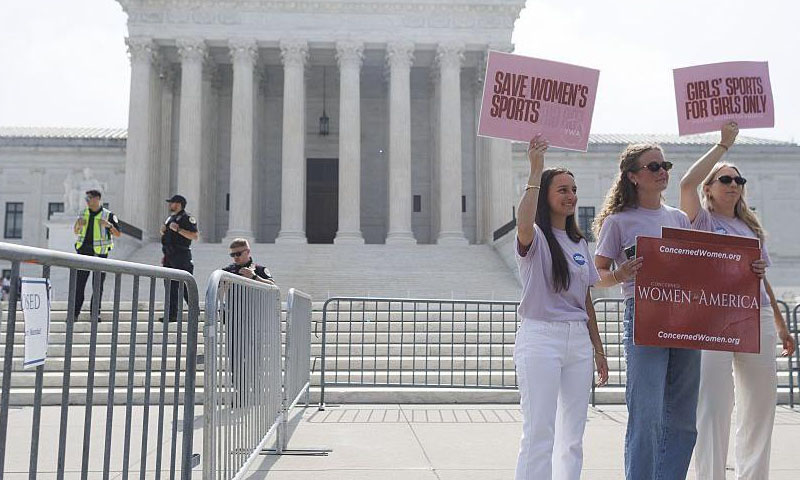
WASHINGTON: The US Supreme Court on Tuesday cleared the way for states to regulate transgender participation in women’s sports, upholding laws in West Virginia and Idaho that ban transgender athletes from female school and university teams.
The court’s 9-0 ruling held that the state laws do not violate Title IX, the federal civil rights law that prohibits sex-based discrimination in education. The legislation in both states defines sports teams in public schools, including universities, according to “biological sex” and restricts participation in women’s teams accordingly. At least 25 other US states have enacted similar laws.
While the decision was unanimous on the Title IX question, the justices were divided on constitutional grounds. The six conservative justices, in the majority, ruled that the laws also do not breach the Fourteenth Amendment’s Equal Protection Clause. The three liberal justices said the issue involved factual disputes that should have prevented a final ruling on constitutional questions.
The ruling was authored by conservative Justice Brett Kavanaugh, who wrote that states may maintain separate men’s and women’s sports and determine eligibility based on biological sex. He said neither the Constitution nor Title IX requires a restructuring of women’s sports across the United States.
The cases were backed by Republican President Donald Trump’s administration, which has taken a hard stance on transgender rights.
Idaho and West Virginia defended their laws as necessary to ensure fair and safe competition for women and girls, while critics argued the measures discriminate against transgender students.
The challenge in West Virginia was brought by student Becky Pepper-Jackson, while the Idaho case was filed by Lindsay Hecox, a transgender student athlete at Boise State University.
The Supreme Court’s decision comes amid broader national debates over transgender rights, including previous rulings allowing states to restrict gender-affirming medical treatments and federal policies limiting transgender participation in the military and identification documents.
The court has increasingly backed state authority in regulating transgender-related issues, particularly in education and sports, as the issue remains deeply divisive in US politics.
You May Also Like



- WEB DESK
- October 5, 2026
Petrol price increased by 88 paisas, diesel cut by Rs1.88

- WEB DESK
- October 5, 2026