
- Web
- 1 Hour ago
Fareed Zakaria calls Pakistan a ‘strategic bridge’ as global powers reassess ties
-

- Web
- 2 Minutes ago
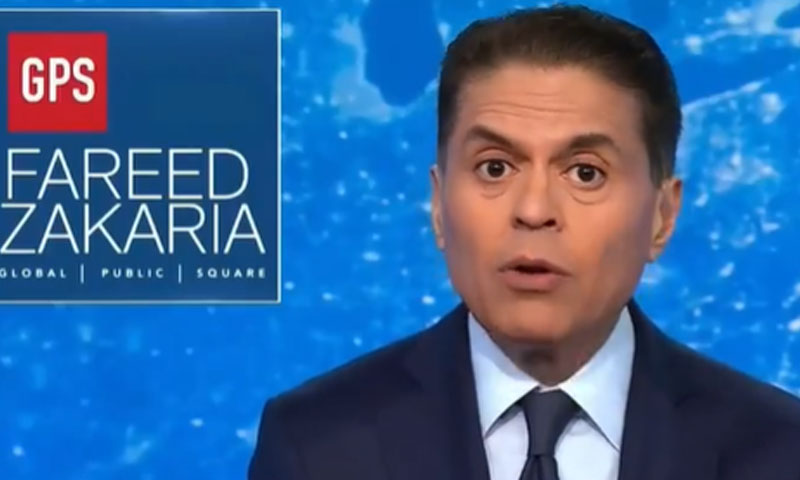
ISLAMABAD: Pakistan’s strategic and diplomatic importance is gaining renewed attention in the evolving global order, with international powers increasingly viewing Islamabad as a key regional player, Fareed Zakria said in an interview with CNN on Thursday.
Speaking on CNN, analyst Fareed Zakaria described Pakistan as a “strategic bridge” connecting South Asia, Central Asia, the Middle East, and the wider Muslim world.
Following the Islamabad Talks, Pakistan is being seen as more active in regional and global diplomacy, while its ties with the United States and Western countries are entering a new phase of strategic engagement.
In the context of the Pakistan’s role as strategic bridge, anti-Pakistan narratives promoted by India and Israel are reportedly losing impact at the international level, as Pakistan’s diplomatic relevance continues to grow.
🛑 Pakistan is not just a country on the map, it is the bridge connecting the West, South Asia, the Middle East, and the wider Muslim world. Its geography, diplomacy, and strategic importance make it central to regional stability and global connectivity.
— Conflict Watch (@ConflictWatchX) May 14, 2026
“Pakistan is a bridge… pic.twitter.com/n39HXzCwIC
During the interview, Zakria said Pakistan’s importance is rising due to intensifying global power competition, energy transit routes, developments in Afghanistan and Iran, and the global race for critical minerals.
Zakaria added that the United States is no longer looking at Pakistan through a narrow historical lens, but is instead reassessing its geographical and diplomatic significance in today’s changing world.
He further noted that Washington requires stable and reliable partners in sensitive regions, and Pakistan fits into that category.
According to him, Pakistan-US relations are not driven by temporary political narratives, but are rooted in long-term strategic interests.
Experts say that China’s expanding regional influence, ongoing uncertainty in Afghanistan, and shifting dynamics in the Middle East have further increased Pakistan’s geopolitical relevance.
They point out that Pakistan’s location, mineral wealth, and connectivity potential make it an important country for global powers.
Analysts also believe that short-term propaganda or media narratives have limited impact on the long-term strategic direction of Pakistan-US relations.
They add that Washington is gradually shifting towards a broader approach focused on trade, economy, minerals, and regional stability, alongside traditional security cooperation.
You May Also Like