
- WEB DESK
- September 14, 2026
Iran seizes two vessels in Strait of Hormuz amid escalating tensions
-

- Zafar Ali
- April 22, 2026
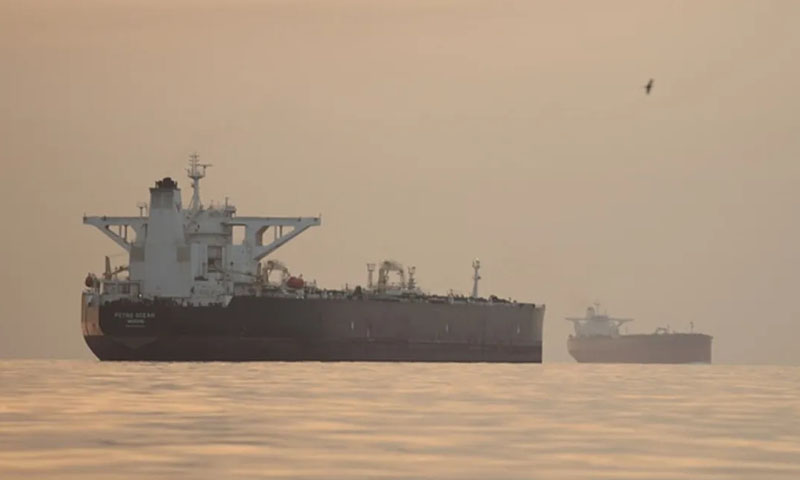
WASHINGTON/DUBAI/ISLAMABAD: Iran seized two vessels in the strategic Strait of Hormuz on Wednesday, tightening its control over the vital waterway, as regional tensions escalated despite renewed diplomatic efforts and uncertainty over proposed ceasefire arrangements.
Iran’s semi-official Tasnim news agency reported that the Islamic Revolutionary Guard Corps (IRGC) intercepted two ships for alleged maritime violations and escorted them to Iranian territorial waters. It marks the first reported seizure of vessels since the latest round of hostilities began in late February.
Earlier, the United Kingdom Maritime Trade Operations (UKMTO) reported that at least three ships came under fire in the strait, with one vessel reportedly approached by an Iranian patrol craft northeast of Oman before being struck by gunfire and rocket-propelled grenades, causing significant damage to its bridge. No casualties were reported.
The Strait of Hormuz, a critical global energy corridor, carries nearly one-fifth of the world’s oil and liquefied natural gas supplies. Iran has repeatedly warned it will restrict shipping through the waterway amid ongoing tensions with the United States.
The developments came shortly after U.S. President Donald Trump said Washington had agreed to a request from Pakistani intermediaries to pause military action against Iran pending further diplomatic engagement.
“We have been asked to hold our Attack on the Country of Iran until such time as their leaders and representatives can come up with a unified proposal… and discussions are concluded,” Trump said in a social media post.
However, even as he announced what appeared to be a conditional pause, Trump also indicated that U.S. naval operations targeting Iranian maritime activity would continue. Washington has recently seized and boarded Iranian vessels, moves Tehran has condemned as “piracy at sea and state terrorism.”
Iran has not issued an official response to Trump’s latest remarks, although state-linked commentary suggested skepticism over Washington’s intentions. Iranian officials have also reiterated that Tehran did not request any extension of a ceasefire arrangement.
Pakistan mediation efforts face uncertainty
Pakistan, which has been attempting to facilitate dialogue between Tehran and Washington, acknowledged that efforts to bring both sides to the negotiating table have faced setbacks.
Diplomatic sources said preparations had been made in Islamabad for potential talks, including arrangements at a high-security hotel, but neither delegation ultimately arrived.
“We had prepared everything. The stage was set,” a Pakistani official said. “It was a setback we were not expecting.”
Another source involved in the process said Islamabad continued to engage both sides, describing Pakistan’s role as “working very hard to bridge the conflict while keeping sensitivities in mind.”
The diplomatic initiative comes amid broader uncertainty over ceasefire arrangements and indirect negotiations involving Iran and the United States, which have struggled to gain traction over core disputes.
Maritime tensions escalate
Throughout the conflict, Iran has sought to assert control over the Strait of Hormuz, at times targeting or detaining vessels it claims violate its maritime regulations. The latest incidents add to concerns over the security of global energy supplies.
UKMTO said one vessel reported heavy damage after coming under sustained fire, while two other ships reported being struck approximately eight nautical miles west of Iranian waters.
Iran has previously justified its maritime actions as defensive measures in response to what it calls unlawful U.S. naval operations in the region.
Nuclear and diplomatic deadlock
Underlying the tensions remains a broader standoff over Iran’s nuclear programme. Washington has demanded restrictions on Iran’s uranium enrichment activities, while Tehran insists its programme is peaceful and sovereign under the Nuclear Non-Proliferation Treaty.
Iran has also called for the lifting of sanctions and recognition of its maritime authority over the Strait of Hormuz.
With diplomatic efforts faltering and maritime tensions rising, the region remains on edge, with fears of further escalation in both military and economic domains.