- Reuters
- October 6, 2026
Trump says he won’t be much more patient with Iran
-

- Zafar Ali
- May 15, 2026
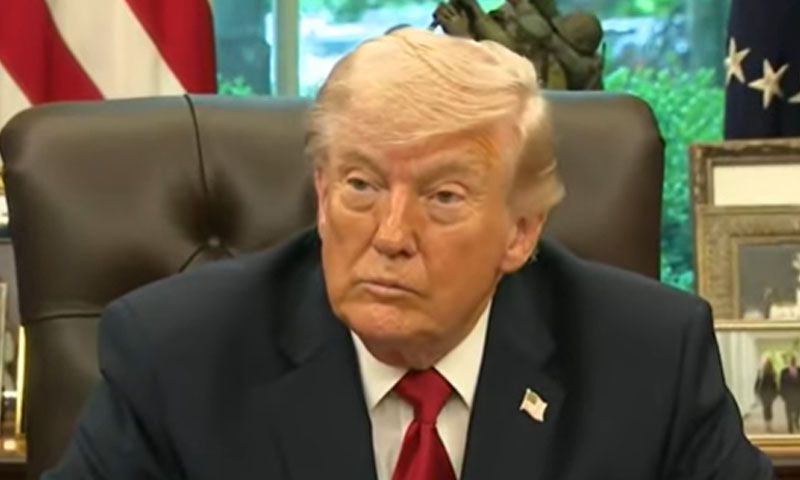
WASHINGTON: US President Donald Trump has said he would not remain patient with Iran for much longer, urging Tehran to strike a deal with Washington while downplaying the necessity of retrieving Iran’s enriched uranium stockpile.
“I am not going to be much more patient,” Trump said in an interview aired Thursday night on Fox News’ “Hannity” programme. “They should make a deal.”
When asked about efforts to recover Iran’s enriched uranium, Trump suggested the issue was more symbolic than a security necessity.
“I don’t think it’s necessary except from a public relations standpoint,” he said. “I just feel better if I got it, actually. But I think it’s more for public relations than it is for anything else.”
The United States, one of the world’s nine recognised nuclear-armed states, has repeatedly insisted that Iran move its highly enriched uranium stockpile abroad and abandon domestic uranium enrichment.
Iran, which denies seeking nuclear weapons, says it has the right to pursue nuclear technology for peaceful purposes, including uranium enrichment, under the Nuclear Non-Proliferation Treaty.
Iranian parliamentary spokesman Ebrahim Rezaei said earlier this week that Tehran could enrich uranium up to 90 per cent purity — considered weapons-grade level — if the country came under attack again.
The more than five-week ceasefire between the United States and Iran remains fragile, with no clear indication that both sides are close to a deal to formally end the conflict, which has also faced growing opposition within the United States.
The U.S. and Israel launched strikes on Iran on February 28, prompting retaliatory attacks by Tehran on Israel and Gulf countries hosting American military bases. The conflict and related Israeli attacks in Lebanon have killed thousands and displaced millions of people.
Human rights groups have criticised Trump’s rhetoric during the conflict, including threats to target civilian infrastructure and comments comparing the U.S. Navy’s blockade operations against Iranian ports to “piracy.”
Diplomacy stalls as US seeks Chinese help over Hormuz crisis
Trump is seeking Chinese support to help end the conflict with Iran, which has increasingly become a political burden ahead of key U.S. midterm elections scheduled for November.
However, analysts say Chinese President Xi Jinping is unlikely to exert major pressure on Tehran or cut military support, viewing Iran as an important strategic counterweight to the United States.
Speaking to CNBC from Beijing, U.S. Treasury Secretary Scott Bessent said China would likely “do what they can” to help reopen the Strait of Hormuz, calling stability in the waterway “very much in their interest.”
Before the conflict erupted, nearly one-fifth of the world’s oil and liquefied natural gas supplies passed through the Strait of Hormuz.
Diplomatic efforts, however, have remained stalled since last week after both Washington and Tehran rejected each other’s latest proposals.
Fujairah, the United Arab Emirates’ only oil export terminal located on the Gulf of Oman outside the Strait of Hormuz, has become increasingly important as it allows some oil shipments to bypass the strategic chokepoint.
Iran meanwhile appears to be negotiating selective passage arrangements with several countries, allowing some vessels to cross the strait under Tehran’s conditions.
A Japanese oil tanker crossed the strait on Wednesday after Japan’s prime minister said she had requested assistance from the Iranian president. A large Chinese tanker also passed through the waterway the same day, while Iran’s Fars News Agency reported Thursday that an agreement had been reached to permit some Chinese ships to transit.
Iran’s Revolutionary Guards claimed that 30 vessels had crossed the strait since Wednesday evening. While still significantly below the roughly 140 daily crossings recorded before the war, the figure marks a notable increase if verified.
Shipping analytics firm Kpler said around 10 ships had crossed the strait over the past 24 hours, compared with five to seven daily crossings in recent weeks.
Iran’s military threat weakened, says US admiral
Thousands of Iranians were killed in U.S. and Israeli airstrikes during the early weeks of the war, while renewed fighting between Israel and the Iran-backed Hezbollah group has also killed thousands in Lebanon.
Talks between Lebanese and Israeli officials held in Washington on Thursday were described as “productive and positive” by a senior U.S. State Department official, who said discussions would continue on Friday.
Trump has said the objectives of the war were to dismantle Iran’s nuclear programme, reduce its ability to attack neighbouring countries and create conditions for Iranians to overthrow their government.
Admiral Brad Cooper told a U.S. Senate committee on Thursday that Iran’s capability to threaten neighbouring states and U.S. regional interests had been “significantly degraded.”
“They no longer threaten regional partners, or the United States, in ways that they were able to do before, across every domain,” Cooper said.
However, the admiral declined to directly comment on reports by Reuters and other organisations suggesting Iran still retains substantial missile and drone capabilities.
Iran’s leadership, which suppressed anti-government protests earlier this year, has not faced any organised domestic opposition since the war began. Analysts say Tehran’s control over access through the Strait of Hormuz has strengthened its leverage in negotiations.
Washington is demanding that Iran surrender its enriched uranium stockpile and halt further enrichment activities. Tehran, meanwhile, is seeking sanctions relief, compensation for war-related damage and recognition of its authority over the strategic waterway.
You May Also Like